
File System Implementations Linux supports many different file systems, each designed with different goals such as performance, reliability, scalability, compatibility, or storage efficiency. Over the…

Characteristics of a File System A file system defines how data is organized, stored, managed, and accessed on a storage device such as a hard…

Linux File System — Core Structure Explained Linux file systems are designed to organize and manage data efficiently across the entire operating system. Unlike Windows,…

Developers can access the power of both Windows and Linux at the same time on a Windows machine. The Windows Subsystem for Linux (WSL) lets…

Introduction This article discuss the real-world applications of Linux and Unix because these operating systems power much of the modern digital world even though many…

Difference Between Linux and Unix Unix and Linux are two of the most important operating systems in computer history.They are similar in many ways, but…
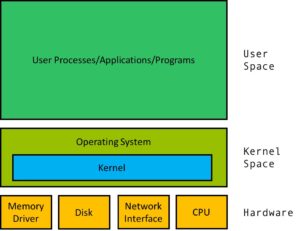
What Is the Linux Kernel? Learning Objectives By the end of this lesson, students should be able to: Understand what the Linux kernel is and…

When people ask whether Linux is better than Windows 11, they are usually expecting a simple answer. But the truth is, this is not just…

When people compare operating systems, the discussion often turns into a simple question: Is Linux better than Windows 11? The truth is more nuanced. Windows…
Operating systems are the fundamental layer that connects hardware and software in any computing system. From personal computers to cloud servers and embedded devices, every…

CVE-2026-31431 100% reliableevery distro since 2017container escape primitive732 bytes Most Linux LPEs need a race window or a kernel-specific offset. Copy Fail is a straight-line logic flaw —…

Introduction A new Linux vulnerability is making waves for one simple reason: It turns a normal user into root… in seconds. No exploit chain.No race…

🚀 Introduction In modern computing, most people only see software. But real systems are built from two layers: hardware architecture operating system To truly…

🚀 Introduction Modern computing is built on two fundamental layers: To truly understand how systems work, you need to understand both. In this article, we…

🚀 Introduction Many people feel frustrated with their computers: Linux offers a different experience. It is fast, secure, flexible, and free. But Linux is more…

Introduction If you want to understand Linux, you need to understand three things: Most tutorials explain them separately.But in real systems, they are connected. Let’s…

Like all Linux distros, it’s important to keep your CentOS system up to date in order to make sure that you have the latest security…

One of the fundamental aspects of working with Linux and Unix-like operating systems is understanding case sensitivity. This feature significantly impacts how you interact with…
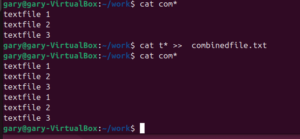
The cat command in Linux is a versatile and frequently used utility for working with text files. It derives its name from “concatenate” and is…
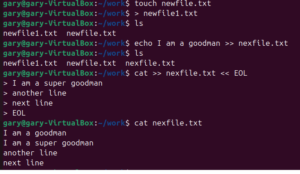
In Linux, you can create a file using redirection by redirecting output from a command to a file. This is a quick and efficient way…