🧠 What is Sequential Processing?
Sequential processing is a way of executing tasks one after another, in order. Sequential processing refers to the execution of tasks or instructions in a specific order, where each task is completed before moving on to the next one. It is a fundamental concept in computing and programming.
Each step must finish before the next one begins.
🔹 Simple Definition
Sequential Processing = Step-by-step execution (no overlap)
⚙️ How It Works
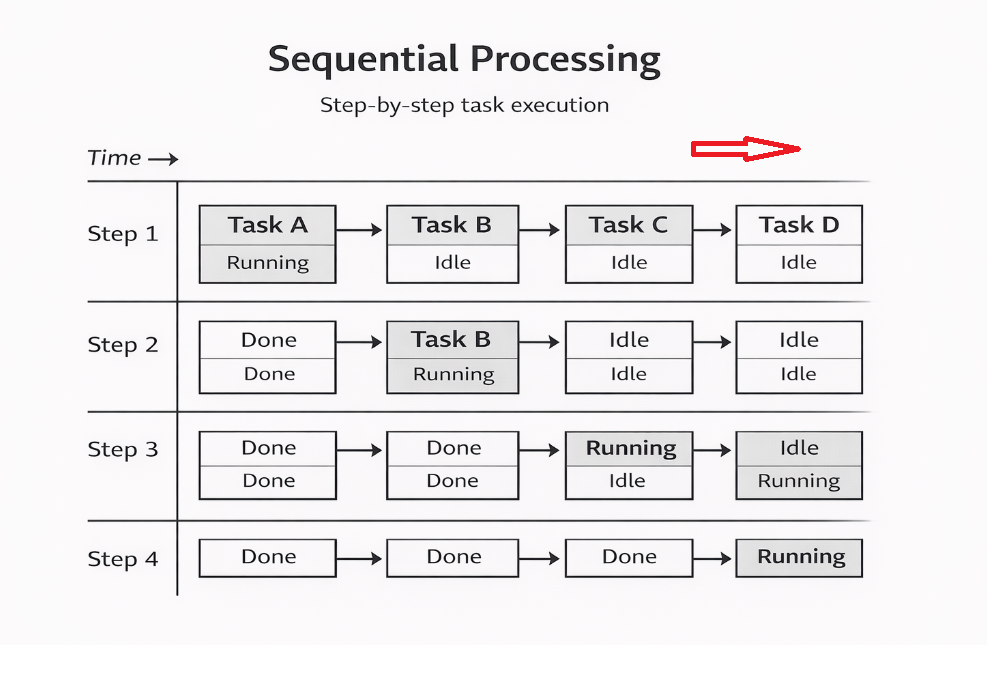
Think of it like a single worker doing tasks:
- Start Task A → finish
- Start Task B → finish
- Start Task C → finish
Only one task at a time.
📊 Example
Task1 → done
Task2 → done
Task3 → done
Task4 → done
👉 No parallelism
👉 No overlap
💻 In Computing (CPU / ARM)
Most processors (like ARM CPUs) use sequential processing:
Fetch → Decode → Execute → Repeat
Each instruction is handled in sequence.
This is why CPUs are:
- Flexible ✅
- Easy to program ✅
- But sometimes slower for heavy workloads ❌
⚡ Sequential vs Parallel 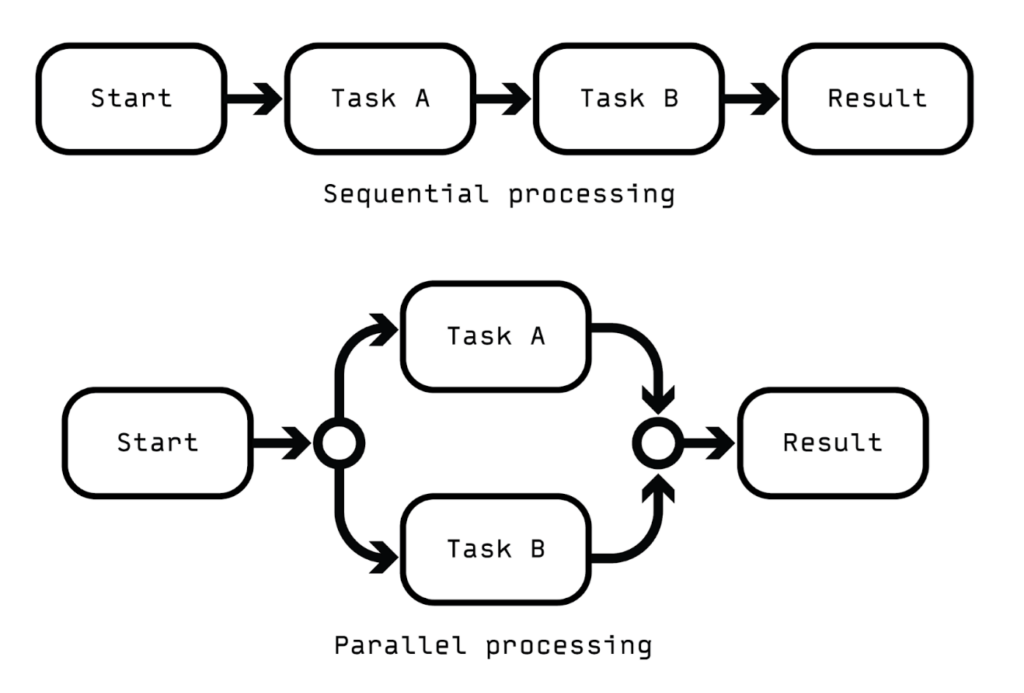
Sequential (CPU):
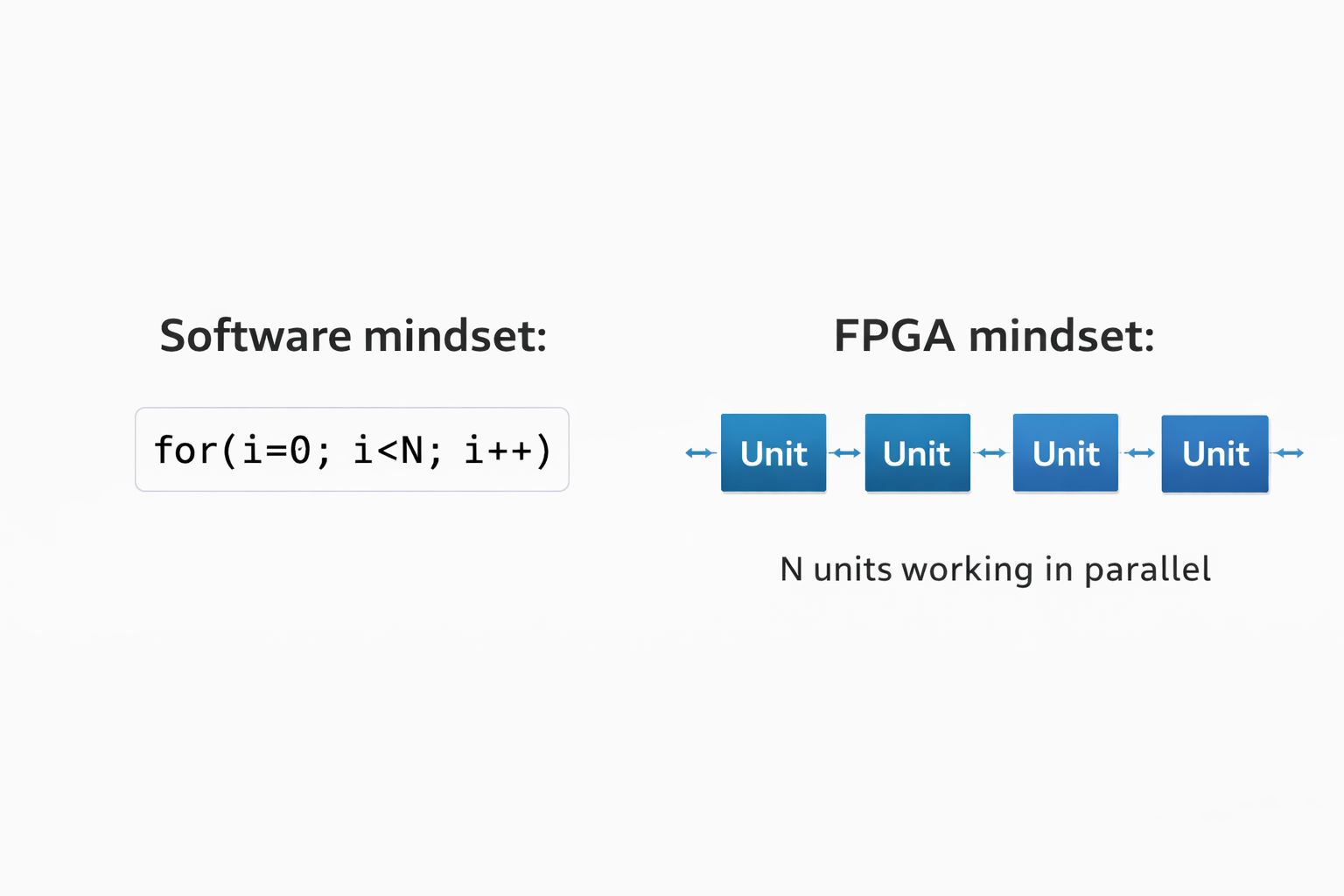
for(i=0; i<4; i++)
    process(data[i]);
Parallel (FPGA mindset):
process all 4 data streams at the same time
👉 Sequential = one lane
👉 Parallel = multi-lane highway
🎯 Real-Life Analogy
- Sequential → One cashier serving customers one by one
- Parallel → Multiple cashiers serving at the same time
🚀 When Sequential Processing is Good
Use it when:
- Tasks depend on each other
- Logic is complex
- Flexibility is more important than speed
⚠️ Limitations
- Slower for large workloads
- Can’t fully utilize hardware
- Not ideal for real-time, high-throughput systems
Technology terms related to sequential processing
Sequential algorithm
A sequential algorithm comprises a series of tasks, instructions, or commands a process must execute in order.
Sequential execution
Sequential execution is the consecutive completion of each task in a series.
Parallel execution
Parallel execution is the simultaneous completion of a single task, or set of tasks, on multiple data elements.
Massively parallel processing query engine
A massively parallel processing query engine interprets a query statement and parallelizes it into tasks for simultaneous execution.
What are some examples of sequential processing in technology?
One common example of sequential processing is reading and writing data to a file. The data is read or written one item at a time, sequentially from the beginning to the end. Another example is the execution of code statements in a programming language, where each line is executed in the order it appears.
In programming, how is sequential processing achieved?
In programming, sequential processing is achieved by writing code in a way that instructions are executed in a particular order. By structuring the code sequentially, each statement is executed after the previous one is completed. Control flow structures, such as loops and conditional statements, help control the sequence of instructions.
What are the advantages of sequential processing in programming?
Sequential processing offers simplicity and ease of understanding. It allows for step-by-step debugging and makes it easier to reason about the program’s behavior. Sequential code is typically easier to write, read, and maintain compared to more complex parallel programming constructs.
Give an example of sequential processing in a program?
Let’s consider a simple program that calculates the sum of numbers from 1 to 10. In this case, you can use a loop to iterate through the numbers one by one and accumulate the sum. Each number is added to the total sequentially, ensuring the correct result.
How does sequential processing affect the performance of a program?
Sequential processing can be efficient for tasks that don’t require parallel execution. However, it may limit performance when dealing with large datasets or computationally intensive tasks. In such cases, parallel processing or optimization techniques may be necessary to improve performance.
How does sequential processing relate to input and output operations?
Sequential processing is often used when performing input and output (I/O) operations. For example, when reading a file sequentially, data is read one item at a time from the beginning to the end. Similarly, when writing data sequentially, it is written in a specific order, preserving the sequence.
Can sequential processing be combined with other processing methods?
Yes, sequential processing can be combined with other processing methods to achieve the desired functionality. For example, a program might use sequential processing for certain tasks while utilizing parallel processing for computationally intensive operations, resulting in a balanced approach.
How does sequential processing apply to data processing and analysis?
In data processing and analysis, sequential processing refers to the systematic handling of data one record or item at a time. It allows for the examination, transformation, and manipulation of data in a specific order, enabling meaningful insights and results to be derived.
What are some common applications of sequential processing in data analysis?
Sequential processing is commonly used in tasks such as data cleaning, where data is processed sequentially to identify and correct errors or inconsistencies. It is also used in data transformation, aggregation, and analysis tasks that require a step-by-step approach.
Can sequential processing be used in real-time systems?
Yes, sequential processing can be used in real-time systems, especially when the tasks can be completed within the required time constraints. However, for time-critical operations, parallel processing or other optimization techniques may be necessary to ensure timely and responsive execution.
How does sequential processing impact the design of algorithms?
Sequential processing heavily influences the design of algorithms, as it determines the order in which operations are performed. Algorithm designers must carefully consider the sequence of steps to ensure correctness and efficiency in solving a specific problem.
Does sequential processing have any limitations or drawbacks?
While sequential processing has its advantages, it does have limitations. One limitation is that it may not exploit the full potential of parallel hardware architectures, leading to suboptimal performance for certain tasks. Additionally, tasks that require complex dependencies or have parallelizable components may not be suitable for sequential processing alone.
Give an example of sequential processing in communication systems?
In a communication system, when receiving a stream of packets or messages, sequential processing is used to handle each packet in order. The system processes one packet at a time, ensuring correct sequencing and data integrity.
How does sequential processing impact the flow of data in a network?
Sequential processing affects the flow of data in a network by ensuring that data packets are processed in the order they are received. This helps maintain the integrity of the data stream, especially for applications that rely on ordered delivery, such as video streaming or voice communication.
Are there any potential bottlenecks associated with sequential processing?
Yes, bottlenecks can occur in sequential processing when certain tasks take a significantly longer time to execute compared to others. These tasks can become a bottleneck, slowing down the overall process and potentially limiting the efficiency of the system.
Can sequential processing be used in multi-threaded applications?
Yes, sequential processing can be used in multi-threaded applications. Each thread can execute tasks sequentially, ensuring a well-defined order of operations within each thread. However, it’s important to manage synchronization and concurrency properly to avoid data inconsistencies or race conditions.
How does sequential processing impact the performance of database operations?
Sequential processing can have an impact on database operations. For example, sequential reads and writes can improve the performance of disk-based databases, as they optimize data access patterns. Sequential processing is also used in database transactions, ensuring that changes are applied in a specific order for consistency and durability.
How does sequential processing impact the execution of a computer program on a single processor?
Sequential processing on a single processor means that instructions are executed one after another in a strict order. The processor fetches and executes instructions sequentially, which ensures that the program’s logic and flow are followed as intended.
🧠 Sequential Processing vs Sequential Computing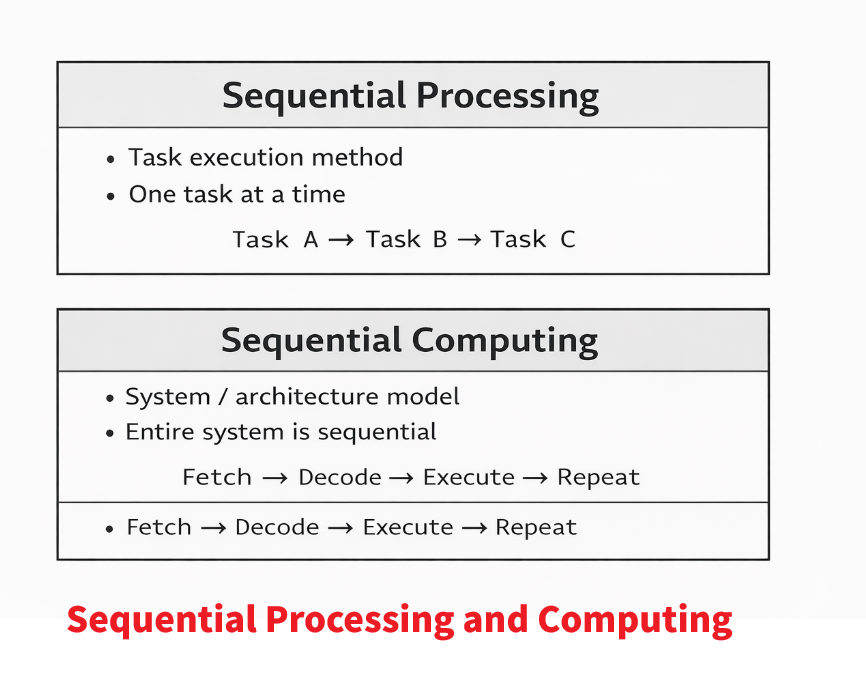
These two sound similar—but they’re not exactly the same level of concept.
🔹 1. Sequential Processing (Execution Level)
👉 What it is:
A method of handling tasks — doing things one after another
✅ Definition
Sequential processing = executing tasks in a strict order, one at a time
📊 Example
Task A → done
Task B → done
Task C → done
🧩 Key idea
- Focuses on how tasks are executed
- Very concrete / operational
- Can exist inside any system (CPU, FPGA, even humans)
🔹 2. Sequential Computing (System / Model Level)
👉 What it is:
A computing paradigm — a whole system designed around sequential execution
✅ Definition
Sequential computing = a computing model where instructions are processed step-by-step in a single flow
⚙️ Example (CPU model)
Fetch → Decode → Execute → Repeat
🧩 Key idea
- Focuses on how the entire system is designed
- Describes an architecture or paradigm
- Typical of CPUs (like ARM)
⚡ The Real Difference
| Aspect | Sequential Processing | Sequential Computing |
|---|---|---|
| Level | Execution / task level | System / architecture level |
| Meaning | How tasks run | How the system is built |
| Scope | Narrow | Broad |
| Example | Task1 → Task2 → Task3 | CPU instruction pipeline |
🎯 Simple Way to Remember
👉 Sequential Processing = Behavior
👉 Sequential Computing = Philosophy
🧠 In FPGA Context 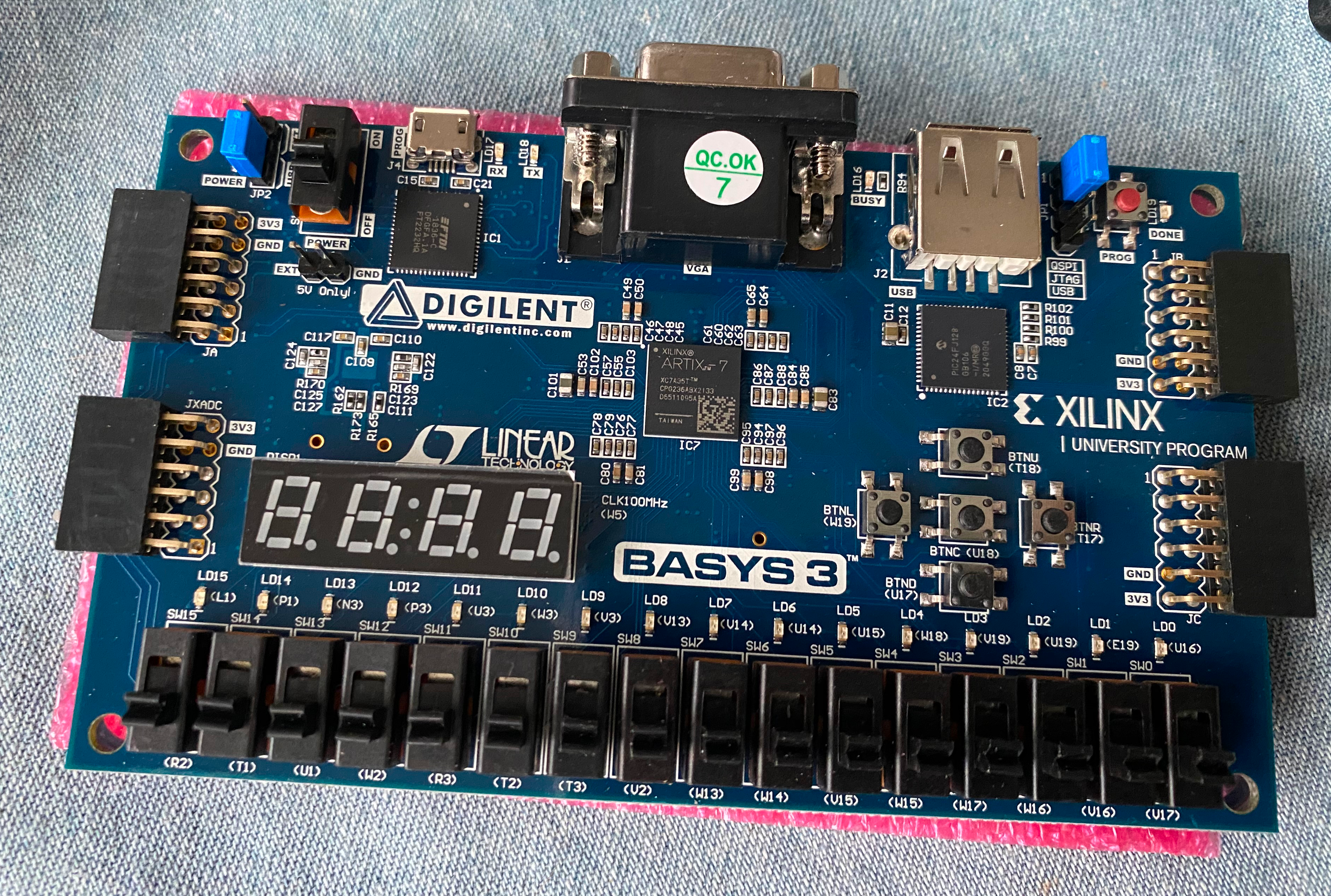
- CPU = Sequential computing system
- FPGA = Parallel computing system
But inside FPGA, you can still design:
- Sequential logic (state machines)
- OR parallel pipelines
👉 That’s why FPGA is powerful: