When people ask whether Linux is better than Windows 11, they are usually expecting a simple answer.
But the truth is, this is not just a comparison between two operating systems.
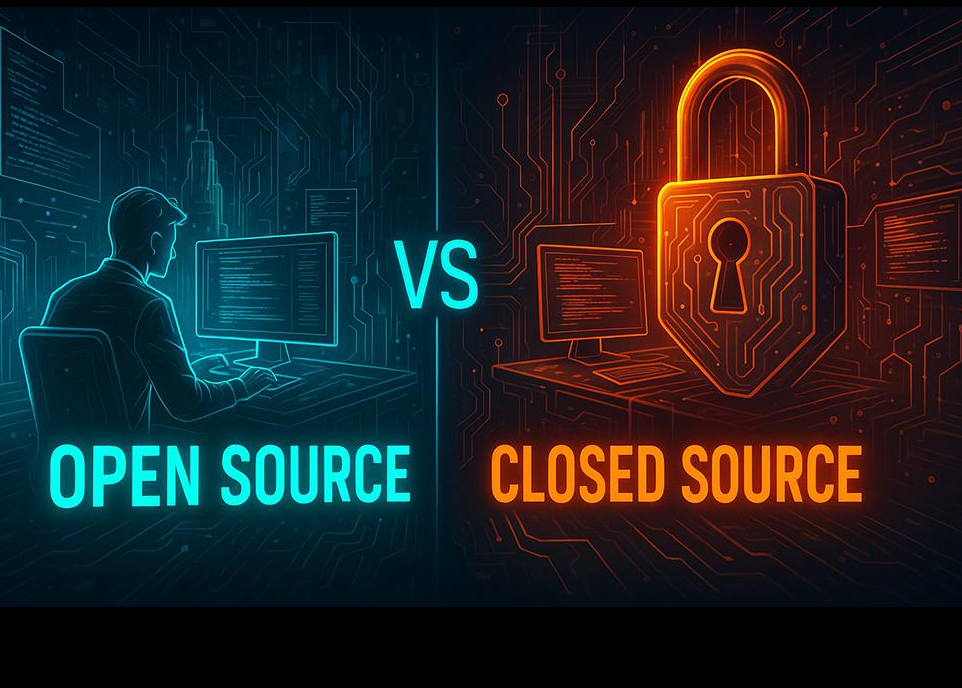
It is a comparison between two fundamentally different philosophies of computing.
Windows is designed to be used.
Linux is designed to be controlled.
And that difference changes everything.
Let’s start with something most people don’t realize.
Linux is not just another operating system sitting next to Windows.
Linux is the foundation of modern computing.
If Linux disappeared tomorrow, most of the internet would stop working.
Cloud platforms would fail.
Servers would go offline.
Embedded systems would break.
But if Windows disappeared, your personal computer would be affected — not the global infrastructure.
That alone tells you something very important.
Linux operates at the core of the digital world.
So why is that the case?
Why do engineers, developers, and large-scale systems consistently choose Linux over Windows?
Let’s break it down.
First, control.
Linux gives you full control over your system.
Not partial control.
Not limited customization.
Full control.
You can inspect the source code.
You can modify the kernel.
You can remove components you don’t need.
You can build a system from the ground up.
This is possible because Linux is open-source.
That means the system is transparent.
Nothing is hidden.
Nothing is locked away.
In contrast, Windows 11 is a proprietary system controlled by Microsoft.
You cannot see how it works internally.
You cannot modify its core behavior.
You cannot remove certain system components.
You are not in control of Windows.
You are a user of Windows.
This difference is subtle, but it is fundamental.
Linux is not just software you run.
It is software you shape.
Now, let’s talk about performance.
Linux is known for being lightweight and efficient.
This is not because it is magically faster.
It is because it does less.
Linux does not force unnecessary background services.
It does not require a heavy graphical interface.
It does not assume that every system needs the same features.
Instead, Linux allows you to build only what you need.
You can run Linux on a server with no graphical interface at all.
You can run Linux on a small embedded device with very limited memory.
You can even run Linux on hardware that would struggle with Windows 11.
Windows, on the other hand, is designed to support a wide range of consumer use cases.
That means it includes:
Background services
Graphical layers
Compatibility features
User experience components
All of these consume system resources.
That’s why Windows typically requires more RAM, more CPU, and more storage.
In small systems, this difference is noticeable.
In large data centers, this difference becomes massive.
Even a small increase in efficiency can save millions of dollars in hardware and energy costs.
Next, let’s look at stability.
Servers are expected to run continuously.
Not for hours.
Not for days.
But for months or even years.
Linux excels in this area.
It is common for Linux servers to run without rebooting for extremely long periods.
This is possible because Linux is designed to be stable and predictable.
Updates can be controlled.
Services can be restarted independently.
The system does not force reboots.
Windows systems, especially in desktop environments, often require restarts after updates.
This is acceptable for personal use.
But in production systems, downtime is expensive.
That is why Linux is the standard choice for servers.
Now let’s talk about security.
Linux uses a strict permission model.
Every file, every process, and every action is controlled by permissions.
Users operate with limited privileges by default.
Administrative actions require explicit authorization.
You must consciously elevate privileges using tools like “sudo”.
This creates a system where accidental damage is less likely.
It also reduces the impact of malicious software.
Windows has improved significantly in security over the years.
But historically, it has been more vulnerable.
Part of the reason is its widespread use.
Another part is its design.
Linux assumes that users should not have full control by default.
Windows historically assumed the opposite.
This difference affects how secure the system is in real-world scenarios.
Now let’s move to something extremely important for engineers: automation.
Modern computing is not about manually managing systems.
It is about automating everything.
Linux is built for automation.
You can write scripts that:
Deploy applications
Configure servers
Update systems
Monitor performance
Manage thousands of machines
All from the command line.
The command-line interface in Linux is not optional. It is central.
You can connect to remote machines using SSH.
You can execute commands across multiple systems.
You can build repeatable workflows.
This is how modern infrastructure operates.
Windows has command-line tools like PowerShell, but they are not as deeply integrated into the system’s design.
Linux treats automation as a first-class feature.
Windows treats it as an additional capability.
Now let’s talk about scalability.
When you are running one computer, simplicity matters.
When you are running thousands of computers, control matters.
Linux scales naturally.
Because it is lightweight, you can run more workloads on the same hardware.
Because it is scriptable, you can manage large systems efficiently.
Because it is open, you can customize it for specific environments.
This is why cloud computing platforms rely heavily on Linux.
Technologies like Docker and Kubernetes are built on Linux features.
Containers use Linux kernel capabilities like namespaces and cgroups.
Without Linux, modern containerization would not exist in the same way.
Linux is not just compatible with the cloud.
It is the foundation of the cloud.
Another important factor is cost.
Linux is free.
This does not mean it lacks support or quality.
It means there are no licensing fees for the operating system itself.
Organizations can deploy thousands of Linux servers without paying per-machine licenses.
Windows Server, in contrast, requires licensing.
At small scale, this may not matter.
At large scale, it becomes a significant expense.
Cost is not just about money.
It is also about flexibility.
Linux allows organizations to avoid vendor lock-in.
They are not dependent on a single company for updates, policies, or features.
They can choose their distribution.
They can modify their system.
They can maintain long-term independence.
Now let’s talk about developers.
Linux is the natural environment for developers and engineers.
Most programming tools are designed for Linux or Unix-like systems.
Compilers
Build systems
Networking tools
Debugging tools
They all integrate naturally into Linux.
If you work with:
Servers
Cloud systems
Embedded devices
FPGA
RISC-V
You will almost certainly use Linux.
Not because you are forced to. But because it is the most suitable environment.
Linux exposes how the system works.
Windows abstracts it.
That is useful for beginners.
But for engineers, understanding the system is essential.
Now let’s be fair.
Windows is not a bad operating system. It is optimized for different goals.
Windows is better for:
General users
Office applications
Gaming
Commercial software
It provides a consistent and easy-to-use experience. You install it, and it works.
Linux often requires more understanding.
You may need to configure things manually.
You may need to learn the command line.
You may need to troubleshoot.
But that effort gives you something valuable.
It gives you knowledge.
And that leads to the most important difference of all.
Linux teaches you how computers work.
Windows hides how computers work.
If you want convenience, Windows is often the better choice.
If you want control, Linux is the better choice.
If you want to become a better engineer, Linux is almost unavoidable.
So when people ask:
“Is Linux better than Windows 11?”
The answer is not universal.
But in terms of:
Control
Performance
Stability
Security
Scalability
Engineering capability
Linux has clear advantages. And that is why:
Linux runs servers
Linux runs the cloud
Linux runs infrastructure
Linux runs the internet
Not by accident. But by design.
So the real question is not:
Which operating system is better?
The real question is:
Do you want to use a system…
or do you want to understand and control it?
If you choose the second path,
you will eventually end up in Linux.