🎬 Video Script: The Reinvention of the CPU — And the 50-Year War Between CISC and RISC
In recent years, tech headlines have been dominated by one question:
How did AMD start beating Intel?
Is ARM about to overthrow x86?
And will RISC-V become the next big threat?
But before we talk about the future of CPUs, there’s a deeper question:
Where did CPUs even come from?
Because once you look into history, you realize something surprising:
👉 The CPU… has actually been reinvented multiple times.
Today, we’re going to trace that journey—
From the very first CPU in 1971
To today’s three-way battle: x86, ARM, and RISC-V
🧠 Chapter 1: The First CPU
It all started in 1969.
A Japanese company called Busicom asked Intel to design a calculator using 8 separate chips.
But Intel was a young startup—and didn’t have the resources.
That’s when engineer Marcian Hoff had a radical idea:
👉 What if… instead of 8 chips, we build one chip that can run programs?
This led to a revolutionary design:
- Memory for data
- Memory for instructions
- Input/output control
- And a programmable processor
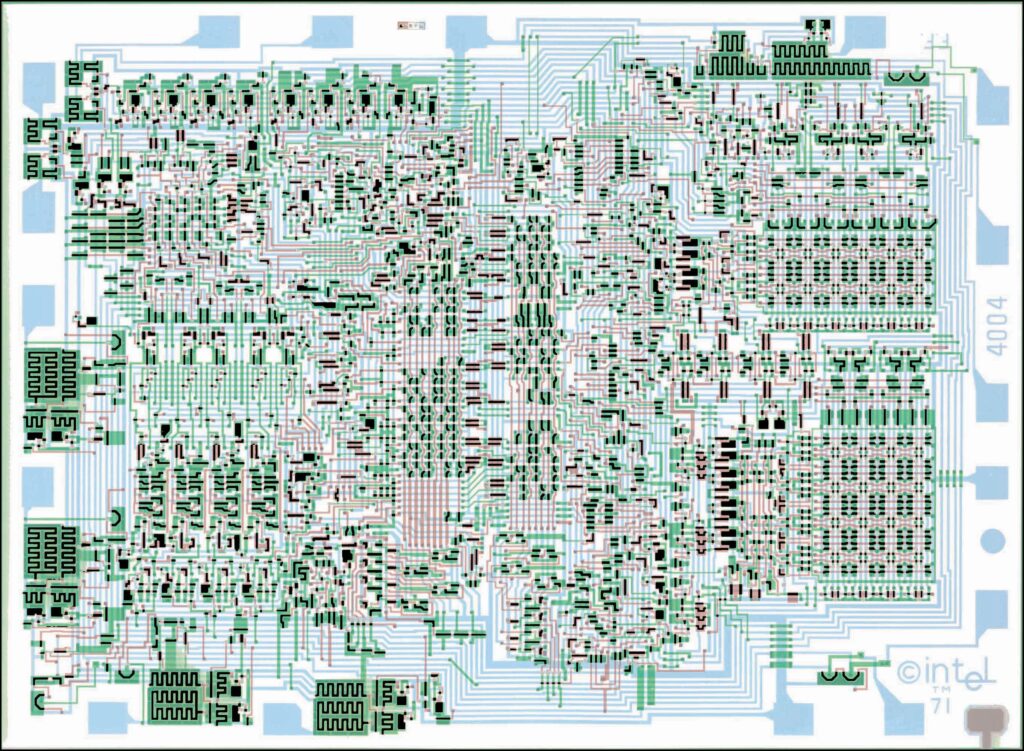
In 1971, Intel released the Intel 4004 — the world’s first CPU.
This was the first invention of the CPU.
At the time, nobody believed it would succeed.
There were only about 20,000 computers in the world.
But soon after, something unexpected happened:
People started writing software for CPUs.
Even two teenagers in Seattle—
Bill Gates and Paul Allen.
💻 Chapter 2: The Rise of x86
Through the 1970s, CPU competition exploded.
New companies and chips appeared:
- Zilog → Z80
- Motorola → 6800
- MOS Technology → 6502
These chips powered early personal computers like the Apple II.
But the real turning point came in 1981.
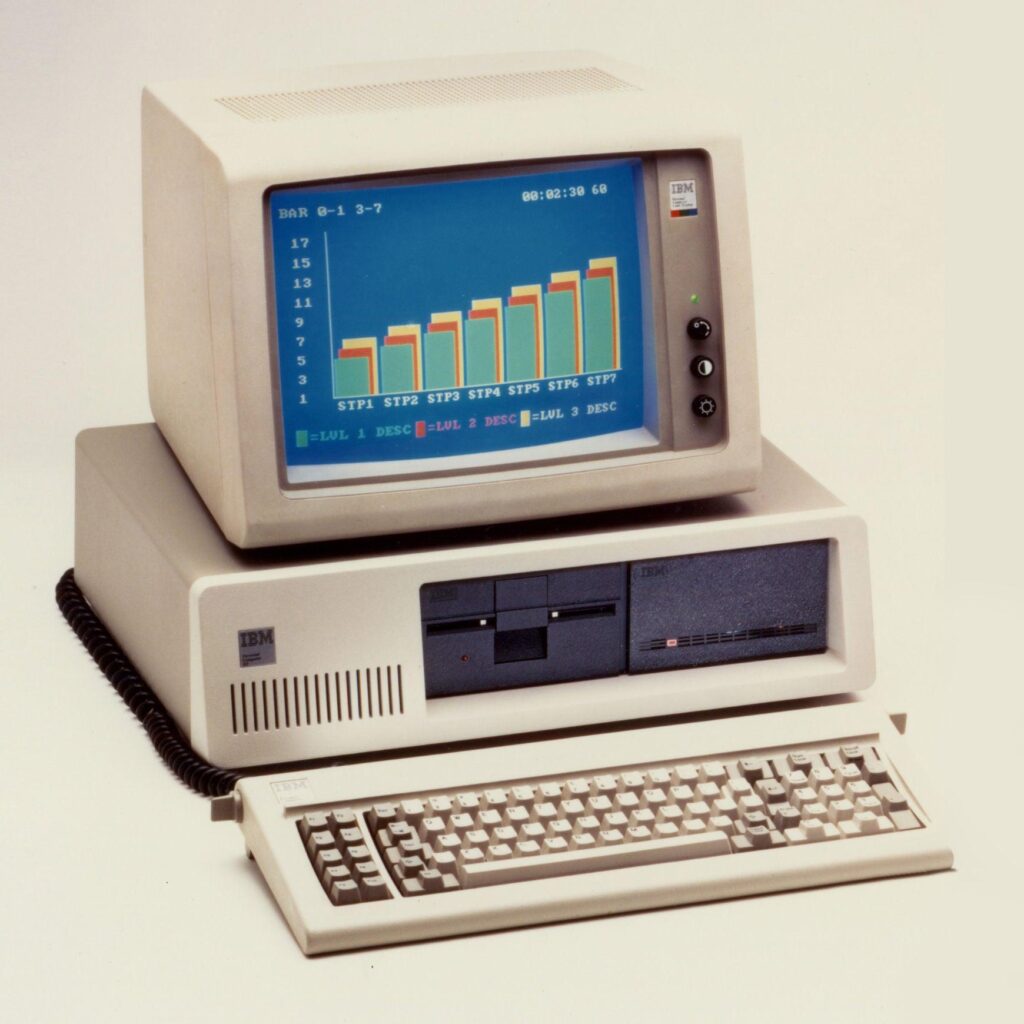
IBM launched the PC… using Intel’s CPU.
That decision changed everything.
Intel doubled down and developed what we now call:
👉 x86 architecture
By the mid-1980s, chips like the 80386 made Intel the center of the PC industry.
⚔️ Chapter 3: The Birth of RISC
But at the same time, researchers noticed a problem.
CPU instructions were messy.
Different lengths, complex logic—hard to optimize.
So in 1981, two professors:
- David Patterson
- John Hennessy
Proposed a new idea:
👉 RISC — Reduced Instruction Set Computing
Instead of complex instructions:
- Use simple, fixed-length instructions
- Let software handle complexity
- Maximize efficiency through pipelines
They predicted:
👉 RISC would eventually outperform CISC
This was the second invention of the CPU.
Soon, RISC designs like MIPS and SPARC dominated:
- Workstations
- Servers
- High-end computing
Meanwhile:
- x86 (CISC) dominated PCs
- RISC dominated everything else

🔁 Chapter 4: CISC Strikes Back
Intel faced a serious threat.
But instead of switching to RISC…
They did something clever.
They cheated the definition.
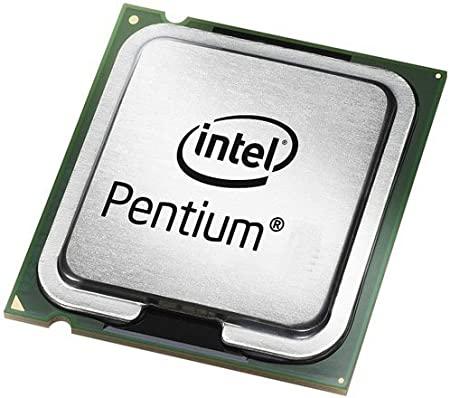
In the 1990s, Intel introduced:
👉 Micro-ops (Micro-Operations)
Internally, x86 CPUs would:
- Translate complex CISC instructions
- Into simple RISC-like operations
So even though x86 was technically CISC…
👉 Inside, it behaved like RISC.
This allowed Intel to:
- Keep backward compatibility
- Match RISC performance
At the same time, Intel pushed:
- Superscalar execution
- SIMD (MMX)
- Advanced manufacturing
By the late 1990s:
👉 x86 started winning everywhere.
💥 Chapter 5: AMD Changes the Game
Intel thought they had won.
They launched a new architecture:
👉 Itanium (EPIC)
The goal?
Replace x86 completely.
But it failed.
Why?
- Poor real-world performance
- Software incompatibility
- Developers hated rewriting code
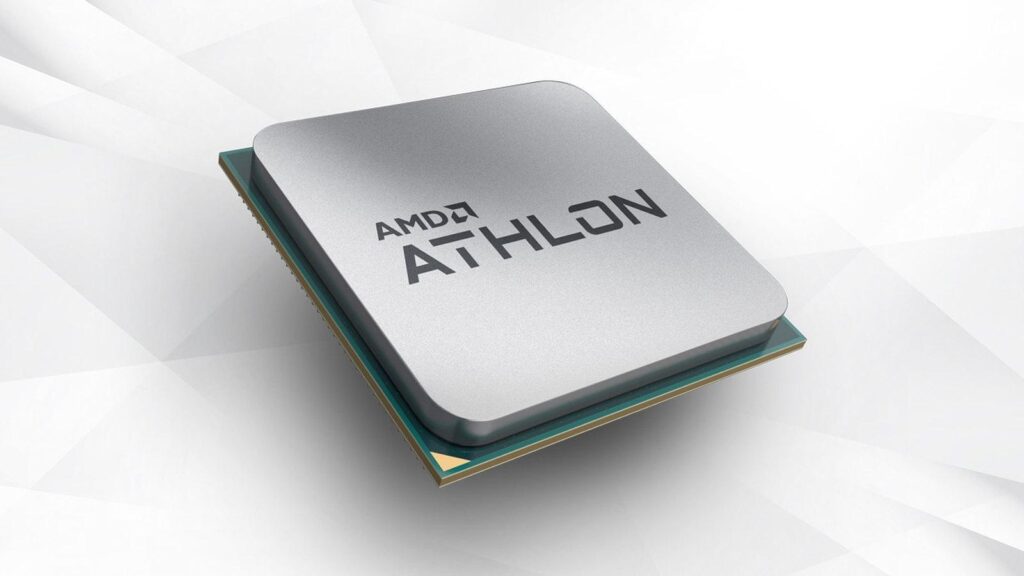
Then came AMD.
Instead of replacing x86…
They extended it.
👉 Introducing AMD64
- Fully 64-bit
- Backward compatible
This became the third major reinvention of the CPU.
Even Intel had to adopt it.
👉 Today’s x86-64?
It’s actually based on AMD’s design.
📱 Chapter 6: ARM’s Quiet Takeover
While Intel and AMD fought…
Another player rose quietly:
👉 Arm
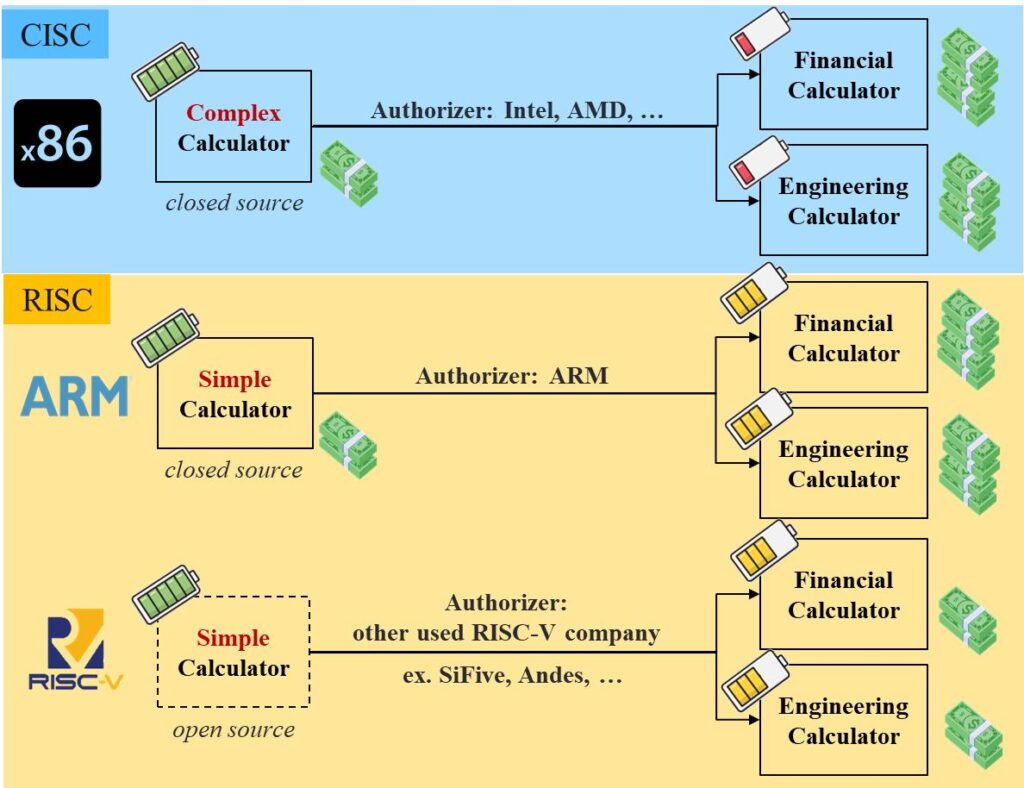
ARM used a different strategy:
- RISC design
- Ultra low power
- Licensing business model
Instead of selling chips…
They sold designs.
This made ARM perfect for:
- Smartphones
- Embedded systems
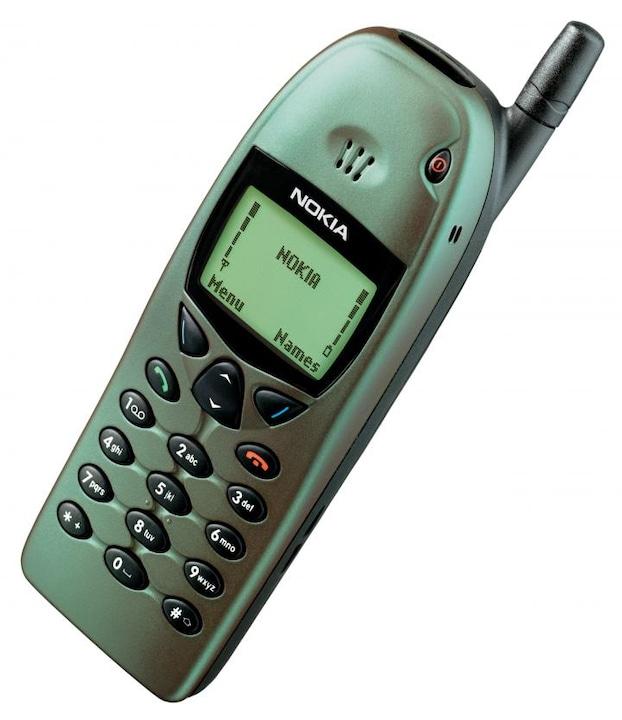
From Nokia phones…
To iPhones…
ARM became the most widely used CPU architecture in the world.
🧪 Chapter 7: RISC-V and the Future
In 2010, researchers at UC Berkeley asked:
👉 Why isn’t there a free CPU architecture?
So they created:
👉 RISC-V
- Open-source instruction set
- No licensing fees
- Fully customizable
Companies like Google, NVIDIA, and Qualcomm are already exploring it.
But today, RISC-V still lacks:
👉 A strong software ecosystem
🏁 Conclusion: Who Won?
So after 50 years…
Who won the war between CISC and RISC?
The answer is:
👉 Neither.
Because today:
- x86 uses RISC-like internals
- ARM dominates mobile and growing in PCs
- RISC-V is rising as an open alternative
This isn’t a war with a winner.
It’s a balance of power.
A fragile equilibrium between:
- Compatibility
- Efficiency
- Cost
- Ecosystem
And that balance… might not last forever.
🎤 [Outro]
So what do you think?
Will ARM replace x86?
Or will RISC-V disrupt everything?
Let me know in the comments.
And if you enjoyed this video—don’t forget to subscribe.